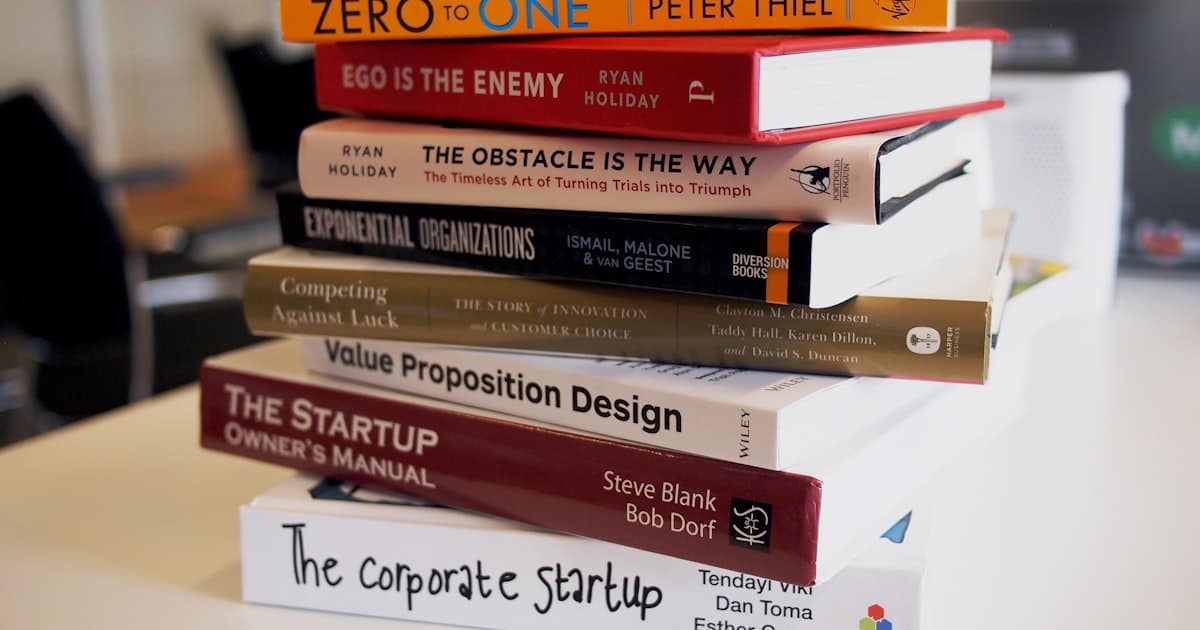
The average person says they want to read more books. The average person read 4 books last year. The gap between intention and action on reading is one of the most common self-improvement failures, and it has almost nothing to do with time and almost everything to do with the system around the habit.
Why reading habits fail
Reading fails as a habit for three consistent reasons. First, books compete with lower-friction alternatives — opening a phone takes one second; opening a book takes effort and sustained attention. Second, people wait for long blocks of time ('I'll read when I have a quiet hour') rather than using small windows consistently. Third, they pick books they think they should read rather than books they actually want to read. Extrinsic motivation (I should read this) produces short bursts and abandoned books; intrinsic motivation (genuine curiosity) produces sustained habits. The Pew Research Center's annual reading survey consistently finds that 25% of American adults read no books in a given year, while another 25% read more than ten — a polarisation that isn't explained by time differences.
The environmental design approach
The single most evidence-backed intervention for building a reading habit is environmental: put books in your way. A book on the bedside table gets read; one on a shelf doesn't. A book in your bag gets opened on a commute; one at home doesn't. James Clear, author of Atomic Habits, calls this 'reducing friction' — designing your environment so that the desired behaviour requires the least effort. Clear also identifies 'habit stacking' as a powerful complement: attaching the new behaviour (reading) to an existing anchor (morning coffee, pre-sleep routine, lunch break) so it inherits the existing behaviour's automaticity. The environment change reduces the decision energy required; the anchor reduces the need for independent motivation.
Reading science on retention and comprehension
Research on reading comprehension offers counterintuitive guidance. Reading speed and retention are inversely related beyond about 300 words per minute — speed reading courses that claim retention parity at 600+ wpm are not supported by experimental evidence. Chunking — pausing deliberately after each chapter to mentally summarise — doubles retention compared to straight reading in most studies. Annotation (writing in margins, underlining with intention) improves encoding for non-fiction. Reading the same book twice produces better comprehension than reading two different books for conceptual understanding, though less breadth. The implication: if a book is worth reading, it's worth reading slowly and actively.
The 10-pages-a-day system
Mortimer Adler's 1940 classic How to Read a Book introduced the idea that most non-fiction books reward analytical reading — actively questioning the author's argument, identifying main theses, evaluating evidence. Adapted to modern reading constraints: 10 pages per day at a consistent time produces approximately one book per month, 12 books per year, 120 books per decade. This is a compounding investment: each book adds to a lattice of frameworks through which subsequent books are understood faster and remembered better. Charlie Munger, known for his extraordinary breadth of reading, described reading as building a lattice of mental models — each new model connecting to existing ones, increasing the value of the whole.
Digital reading vs physical books
Research comparing digital and physical reading is consistent in one finding: for complex, conceptual material, physical books produce better comprehension and retention than screens. A 2021 meta-analysis of 54 studies by Pablo Delgado and colleagues found a significant 'screen inferiority effect' for non-fiction reading on comprehension measures. The likely mechanism is metacognitive: readers on screens tend to read shallower and faster, underestimating their own comprehension needs. Physical books also lack the interruption affordances of digital devices (notifications, links, suggested content). For light fiction or audiobooks, the medium matters less. For anything you want to understand and remember, physical is meaningfully better.
“You don't rise to the level of your goals. You fall to the level of your systems. Build a system that reads, and reading will follow.”
Pro tip
Read two books simultaneously — one non-fiction, one fiction. When one feels like work, switch to the other. This prevents reading becoming a chore and keeps the habit alive across different moods and energy levels.
Reading more is not a discipline problem. It's an environment problem and a choice problem. Put books in your physical path, choose books you genuinely want to read, and read when you have 10 minutes rather than waiting for an ideal hour that never arrives. The cumulative effect of 10 minutes a day is a book a month. Twelve books a year. One hundred and twenty books in a decade.
Share this snack