Back to blog
Learning Apps11 min read

Best Quizlet Alternatives in 2026

Looking for apps like Quizlet in 2026? We compare Anki, Brainscape, Gizmo, Khan Academy and SnackIQ on price, free plans and who each one suits best.

SnackIQ

By SnackIQ Team

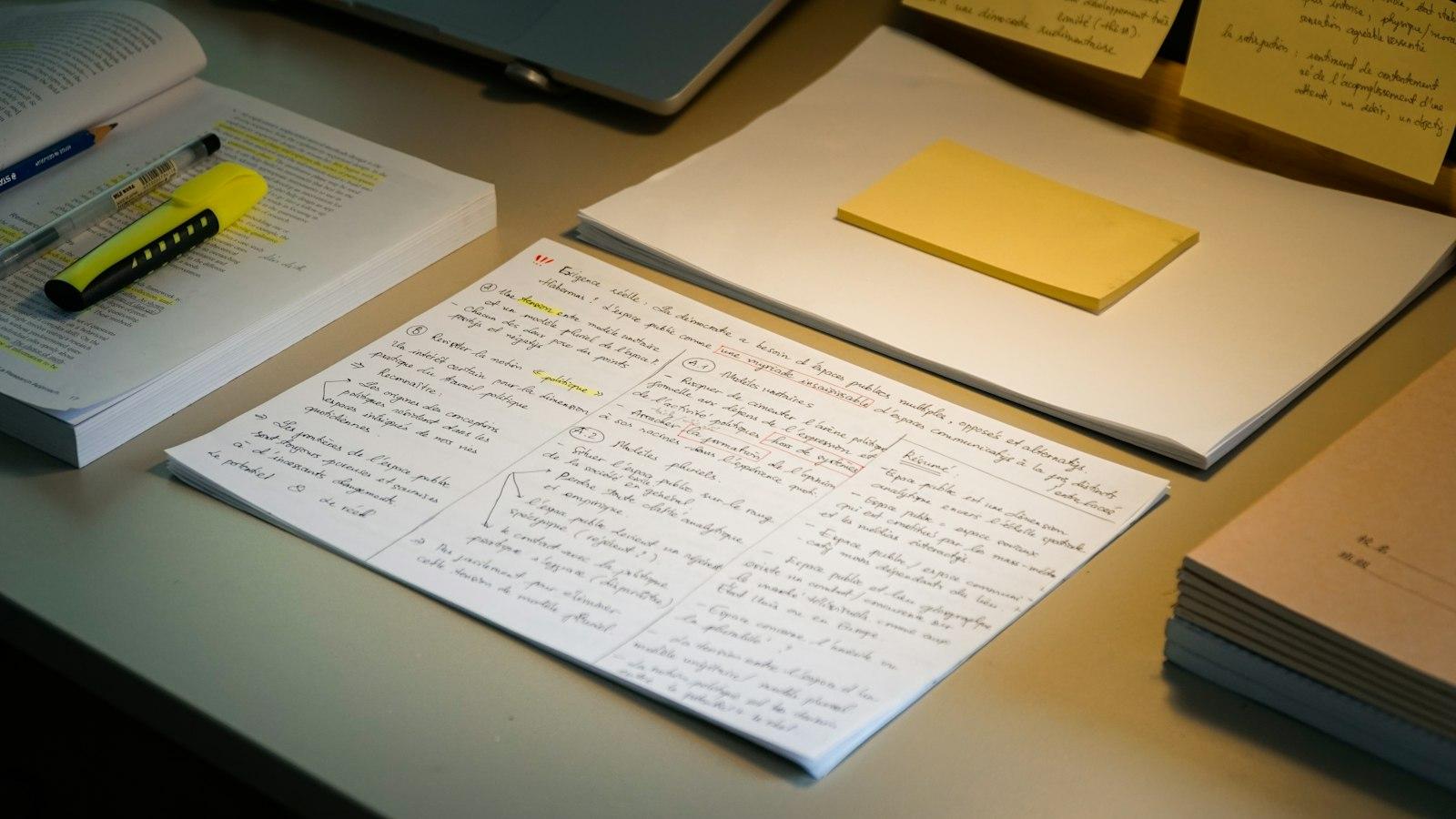
Handwritten study notes beside a yellow highlighter, sticky notes and an open textbook on a desk

Quizlet is still the first app most students reach for. You type a term, add a definition, and within minutes you have a deck you can flip through, play games with or share with a friend. For a lot of people, it's where flashcards started.

The catch comes when you study seriously. Quizlet's free plan keeps the flashcards, but its strongest study tools now sit behind a subscription, and even the cheaper paid plan has caps. Quizlet Plus, at $35.99 a year, gives you 20 rounds of its Learn mode and 3 practice tests a month. Removing those limits means Quizlet Plus Unlimited, at $44.99 a year.

That sends people looking around, usually for one of three reasons. They want something genuinely free, they want an app that does more of the remembering work for them, or they've left school and want to keep learning without a test to cram for.

This guide covers five Quizlet alternatives worth your time in 2026: Anki, SnackIQ, Brainscape, Gizmo and Khan Academy. For each one you'll see what it does, what it costs, where it falls short and who it suits best, plus a straight answer on the free options and a side-by-side table at the end.

Why Are People Looking for Quizlet Alternatives?

Quizlet built its name on a simple idea: anyone can make a set of flashcards, and anyone can study someone else's. That library of shared sets is still its biggest strength. If your class already shares Quizlet sets, leaving means giving that up, and it's worth weighing before you switch.

The frustration is mostly about paying. Here's what Quizlet charges in the US, from its own upgrade page in November 2026:

  • Quizlet Plus: $35.99 a year, with 3 practice tests, 3 textbook solutions or Q&A answers and 20 rounds of Learn questions a month, and no ads
  • Quizlet Plus Unlimited: $44.99 a year, with full access to practice tests, unlimited Learn rounds and no ads
  • Quizlet Family: $83.99 a year, sharing Plus Unlimited with up to 4 other people

Quizlet's page also says paying yearly saves 62% compared with paying monthly, so a month-by-month subscription costs noticeably more.

None of that makes Quizlet a bad app. It does mean the right choice depends on how you study. If you mostly flip cards and play the matching game, the free plan may be all you need. If you lean on Learn and practice tests before every exam, the caps on Plus can bite at exactly the wrong moment, and that's when the alternatives below start to make sense.

Is Anki Still the Best App for Serious Studying?

Anki is the flashcard app people move to when an exam really matters. It's open source, it's built around spaced repetition, and nearly all of it is free. Spaced repetition means the app shows you a card again just before you're likely to forget it, so easy cards come back rarely and hard ones come back often. Your review time goes on the cards you actually struggle with.

The trade-off is polish. Anki looks plain, the settings can feel overwhelming, and you either build your own decks or download shared ones from AnkiWeb. Once it's set up, though, it does one job extremely well.

Pricing:

  • Free: Anki on Windows, Mac and Linux, AnkiDroid on Android (built by volunteers), and AnkiWeb in any browser
  • Paid: AnkiMobile for iPhone and iPad, a one-time $24.99 in the US App Store, with no subscription. The money supports the open-source project

Pros: free on almost every device; no ads; spaced repetition that adapts to how well you know each card; decks sync between your devices through a free AnkiWeb account.

Cons: dated design and a real learning curve; the iPhone app costs $24.99; no study games like Quizlet's.

Best for: students facing big exams, in subjects like medicine, law or languages, who will review a little every day.

The best flashcard app is the one you'll actually open tomorrow, not the one with the most features.

Is SnackIQ Worth the Wait for Lifelong Learners?

SnackIQ is a different kind of app, so it's worth being clear up front: it isn't a flashcard maker, and it won't help you cram for a test on Friday. It's a daily learning app opening soon, built for people who enjoyed the quiz side of Quizlet but now want to learn new things rather than memorise a syllabus.

Each lesson takes about 60 seconds and ends with a quick quiz question to help it stick. Lessons cover 12 topics: Science, Money, Psychology, Health, Life Skills, Productivity, AI & Tech, History, Philosophy, Pop Culture, Languages and World. A daily streak, gems and Niq, the app's mascot, keep the habit going, and you can share lessons with friends.

Pricing:

  • Free: 5 lessons a day in 3 topics of your choice, with streaks, gems and Niq
  • Pro: $4.99 a month or $29.99 a year, with unlimited lessons, every topic, no ads and streak recovery, plus a 7-day free trial

There's no card needed to start.

It's launching on iPhone, Android and the web at the same time, and the waitlist is open now, with no credit card needed.

Pros: covers far more subjects than any single course; short enough for a coffee break; a quiz question after every lesson; a free plan you can use every day.

Cons: not out yet; not built for exam prep; you can't make your own cards or decks.

Best for: adults and older students who want a short daily learning habit across lots of subjects.

Is Brainscape the Easiest Way to Drill Hard Cards?

Brainscape feels familiar if you're coming from Quizlet: you make cards, flip them and study. The difference is what happens after each flip. Brainscape asks how well you knew the answer on a scale of 1 to 5, then brings back the cards you rated low far more often than the ones you rated high. It calls this confidence-based repetition, and it's a gentler way into spaced repetition than Anki's settings.

The free plan is more generous than many people expect. The paid plan mainly adds Brainscape's ready-made Certified decks and extra card features.

Pricing (from Brainscape's pricing page, November 2026):

  • Basic, free forever: unlimited cards you make or that are shared with you, AI to make hundreds of flashcards, 2,500 pre-loaded cards from its library, spaced repetition and progress tracking
  • Pro, $7.99 a month on a yearly plan: unlimited AI flashcards, unlimited Certified decks, images and sounds on cards, reverse flashcards and private decks

Brainscape works on the web, iPhone and Android.

Pros: a simple rating system that focuses your time; a strong free plan for your own decks; cleaner and easier to start than Anki.

Cons: the big ready-made library sits behind Pro; fewer games than Quizlet; the $7.99 price is for a yearly plan.

Best for: learners who make their own decks and want the app to decide what to review next.

Can Gizmo Turn Your Notes Into Flashcards?

Gizmo is the one to try if making flashcards is the part you dread. You give it what you're learning and its AI turns it into flashcards and quizzes, then review plays out like a game. It has grown fast: TechCrunch reported in April 2026 that Gizmo had more than 13 million users and had raised $22 million.

The free plan is genuinely usable, with a few limits built in to nudge you towards paying.

Pricing:

  • Free: unlimited cards and decks and practice tests, with a 20-minute wait between AI imports. Hints cost coins, and wrong answers use up lives that refill over time
  • Gizmo Unlimited: no waits, unlimited hints and unlimited lives. The price depends on the plan, the country and the app store, so check it inside the app

Gizmo has apps for iPhone and Android.

Pros: saves the time spent making cards; fun, game-style review; a useful free plan.

Cons: AI-made cards can contain mistakes, so check them; running out of lives can cut a session short; pricing isn't simple to compare.

Best for: students with lots of notes and not much time.

Is Khan Academy Better Than Flashcards for Learning?

Flashcards are great for remembering things you already understand. They're much less help when you don't understand the topic yet, and that's where Khan Academy comes in. It's a non-profit with free courses in math, science, computing, economics, history and test prep, each with practice exercises, quizzes and unit tests.

There are no ads and no paid tier for the courses. The only paid extra is Khanmigo, an optional AI tutor that costs $4 a month for learners in the US. Khan Academy works on the web and in its mobile apps.

Used alongside a flashcard app, it covers both halves of studying: Khan Academy to learn the idea, and Anki, Brainscape or Gizmo to keep it in your head.

Pros: completely free, with no ads; explains topics step by step; practice and tests built in.

Cons: not a flashcard app, so you can't make your own decks; strongest in school subjects.

Best for: students who need to understand a topic before they can memorise it.

Is There a Free Quizlet Alternative?

Yes, several, and it helps to know what Quizlet's own free plan covers first. You can still make and study flashcards for free, with ads. What it holds back is the heavier studying: Quizlet's paid plans are what unlock regular Learn rounds and practice tests, and even Quizlet Plus stops at 20 Learn rounds and 3 practice tests a month.

If you want to pay nothing at all, these are the strongest options:

  • Anki: free on Windows, Mac, Linux, Android and the web; only the iPhone app costs money, and only once
  • Brainscape Basic: unlimited cards you make, with spaced repetition, free forever
  • Gizmo's free plan: unlimited AI-made cards and decks, with waits between imports and a limited supply of lives
  • Khan Academy: free courses, practice and tests, with no ads

SnackIQ will have a free plan too when it opens, with 5 lessons a day in 3 topics, though it's for learning new things rather than reviewing your own cards.

The honest answer for most students is Anki if you're willing to spend a little time setting it up, and Brainscape if you want something that works straight away.

How Do These Quizlet Alternatives Compare?

Here's how the five alternatives stack up against Quizlet on the things that matter most when you switch.

AppBest forFree planPaid plan (US)Works on
QuizletShared class sets and study gamesFlashcards, with adsPlus $35.99/yr, Plus Unlimited $44.99/yriPhone, Android, web
AnkiSerious long-term memorisingFree on computers, Android and webiPhone app $24.99, onceWindows, Mac, Linux, Android, iPhone, web
SnackIQA daily learning habit across 12 topics5 lessons a day, 3 topicsPro $4.99/mo or $29.99/yrOpening soon on iPhone, Android and web
BrainscapeDrilling hard cardsUnlimited cards you makePro $7.99/mo on a yearly planWeb, iPhone, Android
GizmoAI-made flashcardsUnlimited cards, with waits and livesGizmo Unlimited, price variesiPhone, Android
Khan AcademyUnderstanding the topic firstEverything, with no adsOptional Khanmigo tutor $4/mo (US)Web, iPhone, Android

Three patterns stand out. Anki is the cheapest serious option by a distance, as long as you don't mind its looks. Brainscape and Gizmo are the easiest to start with, one by rating your cards and one by making them for you. And Khan Academy fills a gap none of the flashcard apps cover: learning the topic in the first place.

SnackIQ is the odd one out on purpose. It isn't trying to replace your exam deck. It's for the part of you that liked learning before it came with a deadline.

Quizlet is still a good app, and its shared sets are hard to replace. But if its caps or prices are pushing you away, you have better options than you might think.

If you want the most powerful free tool and don't mind a learning curve, choose Anki. If you want spaced repetition without the setup, try Brainscape. If making cards is what slows you down, let Gizmo build them. If you need to understand a topic before memorising it, start with Khan Academy. And if you've finished with exams but not with learning, join the SnackIQ waitlist for short daily lessons when it opens.

Related terms

Plain-English definitions from the SnackIQ Glossary.

  • Retrieval Practice

    /rɪˈtrɪvəl ˈpræktɪs/Psychology

    Retrieval practice is the learning technique of repeatedly recalling information from memory rather than passively re-reading it.

  • Retrieval Failure

    /rɪˈtrɪvəl ˈfeɪljər/Psychology

    Retrieval failure is when information is stored in your long-term memory but you cannot access it when you need it, typically because the retrieval cues present don't match the cues encoded with the original memory.

  • Working Memory

    /ˈwɜːkɪŋ ˈmeməri/Neuroscience

    The cognitive system that temporarily holds and manipulates information needed for complex tasks such as reasoning, comprehension, and learning.

  • Cognitive Load

    /kɒɡˈnɪtɪv loʊd/Psychology

    Cognitive load is the amount of mental effort your working memory is using at any given moment.

Frequently asked questions

  • For most people it's Anki. It's free on Windows, Mac, Linux, Android and the web, has no ads, and uses spaced repetition to schedule your reviews; only the iPhone app costs money, as a one-time $24.99. If Anki feels too fiddly, Brainscape's free Basic plan gives you unlimited cards of your own with a simpler rating system. Gizmo's free plan is the best choice if you want AI to make the cards for you.

  • For long-term memorising, Anki usually wins: its spaced repetition decides when each card comes back, and it costs nothing on most devices. Quizlet is easier to pick up, looks friendlier, has study games and gives you a huge library of sets other people have shared. Choose Anki if you'll review every day and want the most out of each session, and Quizlet if you want something quick and familiar.

  • In the US, Quizlet Plus costs $35.99 a year and includes 3 practice tests and 20 rounds of Learn questions a month, with no ads. Quizlet Plus Unlimited costs $44.99 a year and removes those caps, and a Family plan at $83.99 a year covers up to 5 accounts. Quizlet says paying yearly saves 62% compared with paying monthly. These prices are from Quizlet's upgrade page in November 2026 and can vary by country.

  • No. SnackIQ is a daily learning app, opening soon on iPhone, Android and the web, built around 60-second lessons that each end with a quick quiz question. You can't make your own cards, so it won't replace Anki or Quizlet for exam revision. It suits people who want to keep learning across 12 topics, from Science to Money to History. The free plan will include 5 lessons a day, and the waitlist is open now.

  • It depends on where you paid. If you subscribed in the iPhone app, cancel in iPhone Settings: tap your name, then Subscriptions. If you subscribed on Android, open the Google Play Store, then Payments & subscriptions. If you paid on Quizlet's website, cancel from your account there. Deleting the app doesn't cancel a subscription, so cancel before a free trial ends if you don't want to be charged.

Share article

SnackIQ

Written by

SnackIQ Team

SnackIQ is a daily learning app with short, fun lessons that fit into a spare few minutes. We're the team building it. Here we share news about the app and plain-English articles on the ideas behind our lessons.

About SnackIQ