
Back to blog
AI & Tech10 min read

7 Reasons AI Burns Shocking Amounts of Power

AI energy consumption and electricity usage are exploding fast. Here's exactly why AI secretly needs far more power than anyone tells you.

SnackIQ

By SnackIQ Team

Detailed image of a server rack with glowing lights in a modern data center.

AI energy consumption and electricity usage are growing at a pace that surprises even the engineers building these systems. In 2023, data centers consumed 4.4% of all U.S. electricity, according to research published by Lawrence Berkeley National Laboratory, and that number could triple by 2028 as AI workloads multiply. A single AI-generated image uses roughly as much electricity as charging your phone. A single ChatGPT query uses approximately ten times the electricity of a standard Google search. These aren't rounding errors. They're symptoms of seven distinct, compounding reasons why AI secretly needs far more power than the tech industry's polished press releases ever mention.

1. Training a Model Is an Energy Supernova

Most people think of AI as something that runs on their laptop. The real electricity bill happens before you ever touch the product.

Training a , the phase where the AI learns from billions of text examples, requires enormous clusters of specialised chips running continuously for weeks or months. Researchers at the University of Massachusetts Amherst estimated that training a large transformer model can emit as much carbon as five cars over their entire lifetimes. That was before models became dramatically larger.

GPT-4, Claude, and Gemini operate at a scale that dwarfs those early estimates. Training runs for frontier models now consume tens of millions of kilowatt-hours in a single campaign. One training run for a major model can draw more electricity than a small town uses in a year.

The reason is the arithmetic. Training involves billions of parameters being updated billions of times. Each update is a matrix multiplication, a mathematical operation that specialised hardware like Nvidia's H100 GPUs executes constantly, at full power, for the entire duration. There is no idle time. The chip either computes or it doesn't train.

This happens once per model version, but models are updated frequently. Every new release, every capability improvement, every fine-tuned variant triggers another training run, sometimes dozens of experimental runs before the final version ships.

2. Every Query You Send Has an Electricity Bill

Training is a one-time cost. Inference, the process of actually answering your questions, runs continuously, at global scale, every second of every day.

When you type a prompt into ChatGPT, the system loads a model with hundreds of billions of parameters, processes your input through multiple computational layers, and generates a response token by token. Each token is a small computation. A long response is thousands of small computations, all chained together.

Research suggests a single ChatGPT query uses roughly ten times the electricity of a Google search. Google processes approximately 8.5 billion searches per day. If even a fraction of those shifted to AI-powered responses, which is exactly what's happening with Google's AI Overviews, the aggregate electricity demand becomes staggering.

OpenAI reportedly serves over 100 million users. Microsoft has embedded AI into Bing, Office, and Azure. Meta runs AI recommendation systems across platforms touching 3 billion people. The inference load is not a future problem, it's already happening at continental scale.

The IEA's 2025 Energy and AI report projects that data center electricity demand will double between 2022 and 2026, driven primarily by AI inference workloads. That projection was made before the viral explosion of AI assistants in late 2024 and 2025.

A single ChatGPT query uses roughly ten times the electricity of a Google search.

3. The Chips Themselves Are Power Furnaces

A standard laptop processor might draw 15 watts under load. An Nvidia H100 GPU, the chip powering most frontier AI today, draws up to 700 watts per unit. Data centers don't buy one. They buy thousands.

A single AI training cluster might house 10,000 to 25,000 H100s running in parallel. Do the rough math: 10,000 chips at 700 watts each is 7 megawatts of chip power alone, before you account for servers, networking, storage, or cooling. A typical coal power plant generates around 600 megawatts, meaning a large AI cluster can consume more than 1% of a full coal plant's output just for its GPUs.

The chips run hot, too. High-performance GPUs generate enormous heat during computation, which creates a secondary problem: that heat has to go somewhere.

  • Air cooling requires massive fans and raised-floor infrastructure
  • Liquid cooling requires water circulation systems and heat exchangers
  • Both require their own power supplies, layered on top of the chip draw
  • Power conversion losses add another 10–15% on top of all of the above

The industry measures this overhead with a metric called Power Usage Effectiveness (PUE). A PUE of 1.0 would mean every watt goes to computing. Real data centers typically run between 1.2 and 1.5, meaning 20–50% extra electricity consumed purely in overhead. AI-optimised facilities push toward 1.2, but the sheer density of GPU clusters makes achieving that harder.

4. Cooling Doubles the Hidden Power Draw

Here's the number the press releases omit: for every watt powering an AI chip, roughly another watt is spent keeping that chip from melting.

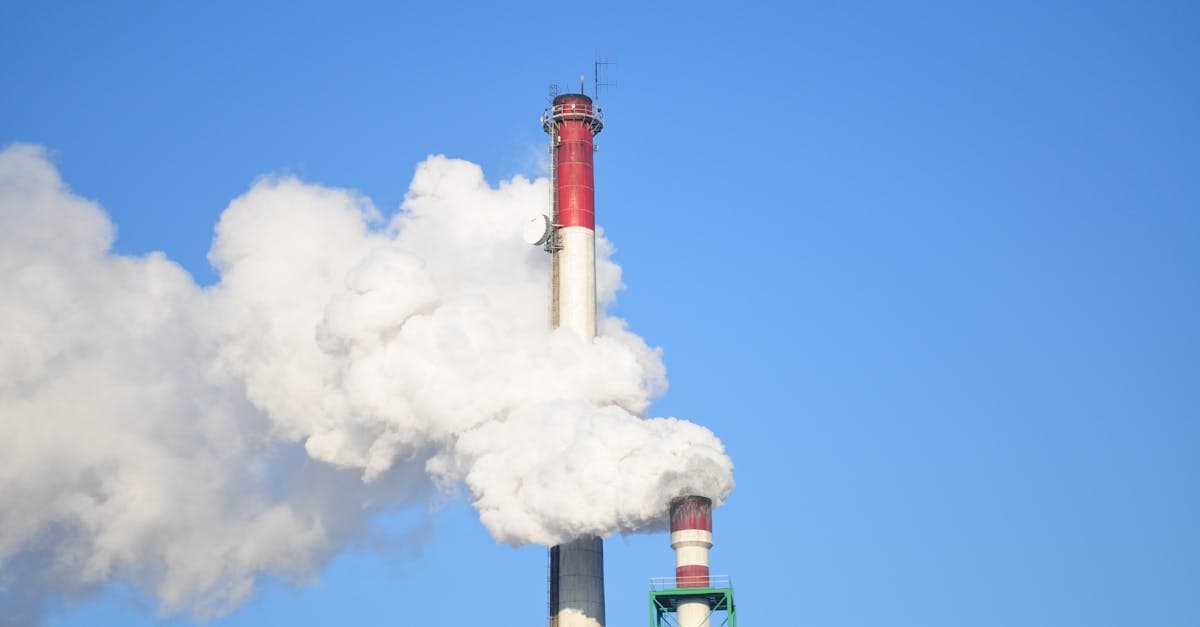
Thermal management is one of the largest electricity consumers in any data center, and AI hardware makes it worse than any previous generation of computing. GPUs packed densely into racks create heat densities that conventional air cooling struggles to handle. The industry is rapidly shifting to liquid cooling, circulating chilled water directly past chip surfaces, but liquid cooling requires chillers, pumps, cooling towers, and the electricity to run all of them.

In warm climates, the problem compounds. A data center in Arizona or Texas requires active refrigeration year-round. A data center in Finland or Iceland can leverage ambient cold air, dramatically reducing cooling costs, which is exactly why Microsoft, Google, and Meta have built facilities near the Arctic Circle.

The IEA estimates that cooling represents a substantial fraction of total data center energy draw globally. When you combine chip power, cooling overhead, power conversion losses, and networking infrastructure, the electricity required to answer your AI prompt is roughly three to four times the raw chip power alone.

This is why efficiency improvements in chip design, while real, don't reduce total AI electricity usage. They just allow more computation within the same power envelope, which operators immediately fill with more workloads.

5. Scale Makes Every Efficiency Gain Disappear

Tech companies will tell you AI is getting more efficient. They're right. They just don't mention what happens next.

This phenomenon has a name: Jevons Paradox, first identified by economist William Stanley Jevons in 1865 when he observed that more efficient steam engines led to more coal consumption, not less. When something becomes cheaper to produce, demand rises to absorb the savings and then some.

AI is following this pattern precisely. Each generation of chips delivers more computation per watt. Each generation of models becomes more parameter-efficient. But each efficiency gain unlocks new use cases, new users, and new deployment contexts, all of which consume electricity. The net result is that total AI energy consumption climbs even as energy per query falls.

Meta, Google, Microsoft, and Amazon are in an arms race for AI capability. None of them will voluntarily slow deployment to manage electricity demand. Each company's competitive incentive is to deploy faster, train bigger, and serve more users. Efficiency gains are immediately reinvested in scale, not in power reduction.

Penn State computer science professor Mahmut Kandemir has noted that this rebound effect is one of the core challenges in making AI sustainable, the engineering solutions exist, but market incentives systematically defeat them.

6. The Grid Cannot Keep Up With Demand

Power plants take years to permit and build. AI data centers take months. That mismatch is becoming a crisis.

Microsoft, Google, and Amazon have collectively announced hundreds of billions of dollars in new data center investment for 2025 and 2026. The electricity demands attached to those commitments are straining regional grids in Virginia, Texas, Georgia, and Ireland, locations that host disproportionate concentrations of global cloud infrastructure.

Northern Virginia, often called Data Center Alley, already hosts more data center capacity than anywhere else on Earth. Local grid operators have warned that planned AI expansion in the region may require new transmission infrastructure that won't be ready for a decade. In Ireland, data centers consumed roughly 21% of all national electricity in 2023, according to the country's grid operator, a figure that prompted serious regulatory debate about approving further construction.

The consequence is that new AI data centers are sometimes forced to connect to grids that still run on coal or gas, precisely because renewable capacity isn't available fast enough. A company might publicly commit to 100% while its newest facilities run on fossil fuels in the interim, a gap that can last years.

This grid pressure has a knock-on effect on electricity prices for everyone. Industrial-scale AI demand is competing directly with residential and commercial users for constrained grid capacity.

7. The Rebound Effect Will Outpace Every Fix

There is genuine progress on AI efficiency. Smaller, specialised models can perform specific tasks with a fraction of the compute of a frontier model. Quantisation techniques compress model weights to reduce memory and power requirements. Neuromorphic chips, processors that mimic the brain's sparse, event-driven firing patterns, promise orders-of-magnitude efficiency improvements for certain tasks.

But the trajectory of demand is moving faster than the trajectory of solutions. The IEA's 2025 Energy and AI report projects that global data center electricity consumption could reach 1,000 terawatt-hours annually by 2026, roughly equivalent to Japan's entire national electricity consumption today.

The uncomfortable arithmetic is this: even if chip efficiency doubles every three years, AI deployment is growing faster than that. Total electricity consumption rises regardless. The only scenarios where AI's energy footprint stabilises involve some combination of:

  1. Radical improvements in model architecture efficiency
  2. Grid decarbonisation outpacing demand growth
  3. Regulatory or market pressure constraining deployment scale
  4. A genuine breakthrough in low-power neuromorphic computing

None of those are guaranteed. Some are decades away. In the meantime, every AI product launch, every new chatbot, every AI-generated image, and every automated email reply adds incrementally to a global electricity demand that is already reshaping how nations plan their energy infrastructure. The revolution is real, and so is the bill.

AI energy consumption isn't a future concern sitting comfortably on a policy agenda. It's happening now, compounding across seven distinct mechanisms, each amplifying the others. The chips burn power, the cooling doubles it, the scale multiplies it, and the grid strains to keep up. Efficiency improvements are real but structurally insufficient. The next time you marvel at what an AI system can do, it's worth holding both truths at once: this technology is genuinely extraordinary, and it is quietly one of the fastest-growing electricity consumers on the planet.

Related terms

Plain-English definitions from the SnackIQ Glossary.

  • Large Language Model

    /lɑːrdʒ ˈlæŋɡwɪdʒ ˈmɒdəl/Technology

    A large language model (LLM) is an AI system trained on vast amounts of text data to predict and generate human language with remarkable accuracy.

  • Renewable Energy

    /rɪˈnjuːəbəl ˈɛnədʒi/Science

    Renewable energy comes from naturally replenishing sources, solar, wind, hydro, geothermal, tidal, that are not depleted when used, unlike fossil fuels which take millions of years to form.

  • Cloud Computing

    /ˌklaʊd kəmˈpjuːtɪŋ/Technology

    Cloud computing means accessing computing resources, servers, storage, software, databases, over the internet on demand, rather than owning and running them yourself.

  • Edge Computing

    /edʒ kəmˈpjuːtɪŋ/Technology

    Edge computing is a method of processing data closer to where it's generated, on local devices or nearby servers, rather than sending all data to a distant cloud data center.

  • Carbon Footprint

    /ˈkɑːbən ˈfʊtprɪnt/Science

    A carbon footprint is the total amount of greenhouse gases, primarily carbon dioxide and methane, produced directly or indirectly by an individual, organisation, product, or event, measured in tonnes of CO₂ equivalent.

Frequently asked questions

  • Training a frontier large language model can consume tens of millions of kilowatt-hours in a single run. Researchers at the University of Massachusetts Amherst found that training earlier, smaller transformer models already produced carbon emissions comparable to five cars over their lifetimes. Modern frontier models are substantially larger, making current training runs significantly more energy-intensive than those earlier estimates.

  • This is Jevons Paradox in action: when a technology becomes more efficient, it becomes cheaper to use, which drives higher adoption and more total usage. Each generation of AI chips delivers more compute per watt, but operators immediately deploy those gains into larger models and more users. Total electricity consumption rises even as energy per query falls, efficiency gains are reinvested in scale, not in power reduction.

  • Training is the most intense single event, but inference, answering user queries in real time, dominates cumulative electricity use because it runs continuously at global scale. A model is trained once (or a handful of times per year), but it handles millions of queries every hour indefinitely. At the scale of ChatGPT, Google AI Overviews, and Meta's recommendation systems, inference electricity consumption vastly exceeds training over any given year.

Share article

SnackIQ

Written by

SnackIQ Team

SnackIQ is a daily learning app with short, fun lessons that fit into a spare few minutes. We're the team building it. Here we share news about the app and plain-English articles on the ideas behind our lessons.

About SnackIQ